
Most outdoor furniture quality control problems do not begin at the final inspection table. They begin when an order moves into production with an unclear sample, an incomplete specification, or a packaging plan that has never been reviewed as carefully as the product itself.
For a European importer, the useful question is not simply, “Will the factory inspect the goods?” It is, “What will both sides compare the goods against, at what stage, and what happens if something does not match?” A final pre-shipment inspection still matters. It is the last practical opportunity to check finished goods before release. But it cannot turn an unapproved rope colour, a missing hardware requirement, or an unsuitable carton into the right product.
This checklist is written for brands, importers, retailers and project buyers sourcing metal and rope outdoor furniture from a factory. It sits at the control stage of the sourcing plan: after a buyer has narrowed the product and material direction, and before packing and shipment release. It focuses on the decisions that should be made before shipment, while there is still time to correct the order. It is not a laboratory test plan or legal advice. The buyer’s intended market, product use and agreed specification must always lead the review.
How this checklist was developed
This checklist follows the practical sequence used to control made-to-order metal and rope outdoor furniture at Colors Furniture: approve the reference, record the product and packing details, review characteristics during production, and compare finished goods with the agreed order before shipment. It combines factory-side production checkpoints with the questions European importers need to settle for their own retail, e-commerce, hospitality or project channel.
It is a purchasing framework rather than a substitute for product-specific testing, an agreed third-party inspection plan or legal advice. Each order still needs its own approved sample, written specification, acceptance rules and destination-market requirements.
Outdoor furniture quality control starts before final inspection
It is easy to treat quality control as one event: the buyer, factory or third-party inspector looks at finished cartons and decides whether the shipment can go. That approach only works when the commercial and product decisions were already made well.
A stronger process gives the final inspection a clear job. The inspector should be able to compare a finished chair, table or set with an approved reference; confirm the correct model, finish, components and packing; check the agreed functions; and record any non-conformity against an acceptance rule already known to both parties.
Without that preparation, “quality” becomes subjective. One person may think a visible weld is acceptable. Another may reject it. One buyer may accept a slight colour variation between cartons; another may not. Neither expectation should first appear when the goods are ready to load.
First, define the product’s real channel and use
Before reviewing details, establish where the furniture will be sold or used. A compact retail bistro set, an e-commerce chair packed for parcel delivery, a garden-centre dining range and a restaurant terrace programme do not create the same questions.
| Buyer context | Questions to settle before production |
|---|---|
| Retail or garden-centre range | Does the product match the approved colour and collection language? Are labels, instructions and cartons ready for the retail channel? |
| E-commerce programme | Can the end customer identify all parts, follow the assembly steps and receive the product without avoidable cosmetic damage? |
| Hospitality or contract use | How will the furniture be moved, cleaned, stored and reordered? What product documentation or testing does the buyer require for that project? |
| Importer repeat order | Which sample, material reference, finish reference, hardware pack and carton specification must be retained to reproduce the same item? |
That conversation affects the inspection list. If a chair is selected because it stacks, the buyer should review the stack, the contact points and the protective method—not only a single chair on a showroom floor. If a table is supplied knock-down, it should be assembled using the intended hardware and instruction sheet. A product can look correct in isolation and still be difficult to sell, assemble or replenish.
Before bulk production: lock the approved reference
The approved sample is important, but it should not be the only reference. A physical sample can show the overall look and feel. The order file should make the less obvious points visible as well: dimensions, frame finish, rope material and weave direction, cushion details where relevant, hardware, feet, carton marks, instructions and included parts.
Use a reference that production can actually follow
A vague instruction such as “same as sample” leaves too much room for interpretation. It is better to attach a product sheet or order confirmation that identifies the model, revision, colour reference, material direction and packing method. If the buyer has approved a change from the original sample, record the change in the same file. That makes the final inspection easier because everyone is checking the current version rather than relying on memory.
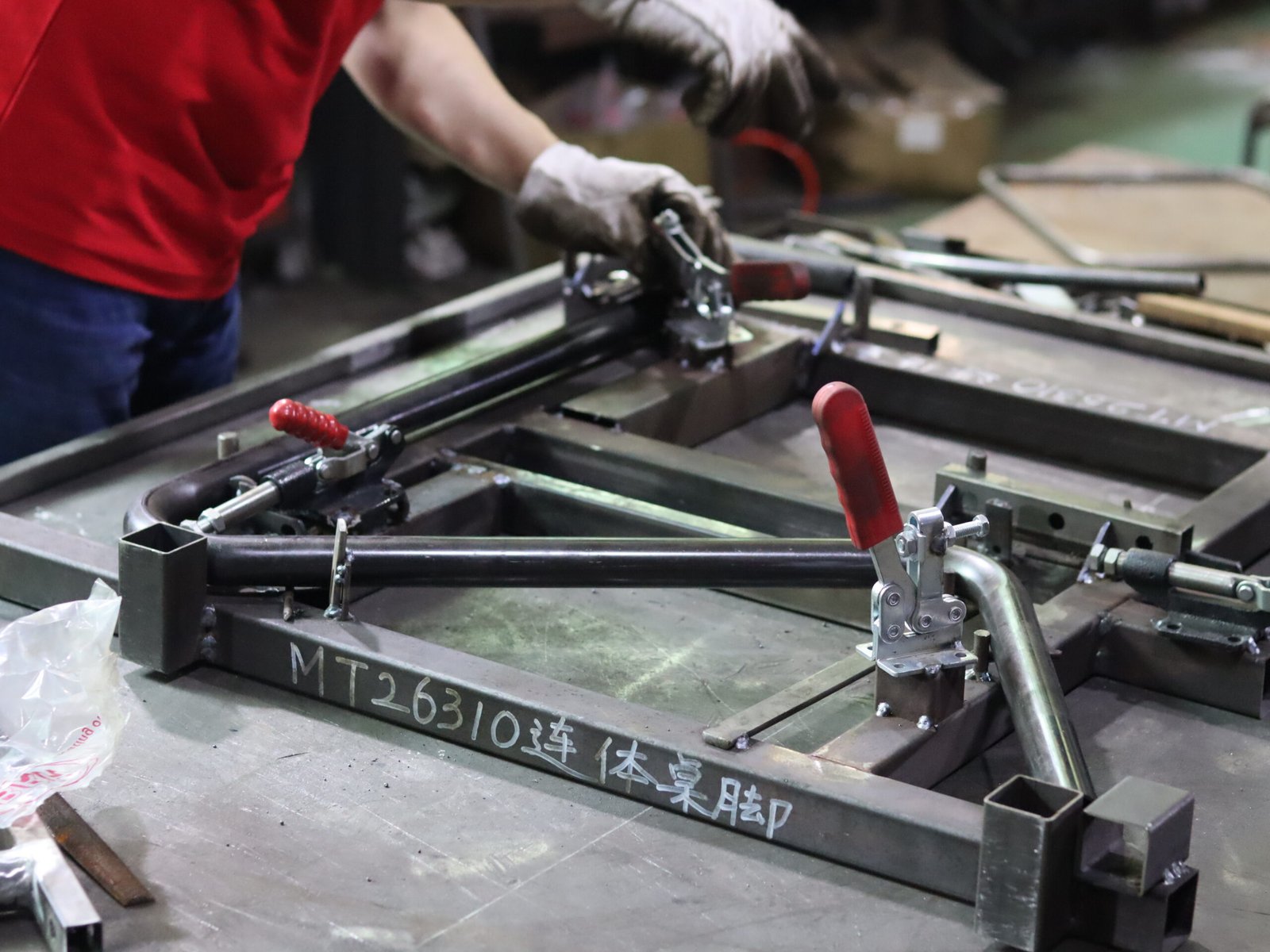
For metal furniture, the early review should include frame shape, key connection points, feet, visible weld locations and any moving or folding mechanism. For rope furniture, identify the rope type, colour, weave pattern, spacing and how the rope finishes at the frame. For tables, confirm the top material, edge detail, assembly points and the relationship between the table base and top.
Where seating or table programmes require mechanical-safety documentation, review the relevant EN 581 report before the approved sample and production specification are frozen. The report should identify the exact model, the relevant standard part and edition, the intended use, and any differences between the tested sample and the proposed order.
Put packing into the same approval conversation
Packaging should not be treated as something added after the furniture is finished. It affects damage risk, warehouse handling, assembly experience and the condition of a product when it reaches the buyer. Ask how exposed frame corners, tabletops, rope surfaces, glass or loose parts will be protected. Confirm whether hardware is packed with the product, where instructions sit, and how cartons are marked by model, colour and quantity.
A buyer does not need to prescribe every material used inside a carton. They do need to agree the outcome they expect: the correct product, protected contact surfaces, identifiable components and a carton that matches the commercial order. If a carton change is likely to affect retail handling or the product’s presentation, it should be reviewed before bulk packing begins.

During production: inspect the characteristics that become difficult to correct later
The useful in-process checks are usually the ones that cannot be corrected cheaply after final assembly. The factory’s own quality route can be reviewed on our Quality Control & Testing page; from the buyer’s side, the goal is to agree which product characteristics need attention at each stage.
Frame, welds and alignment
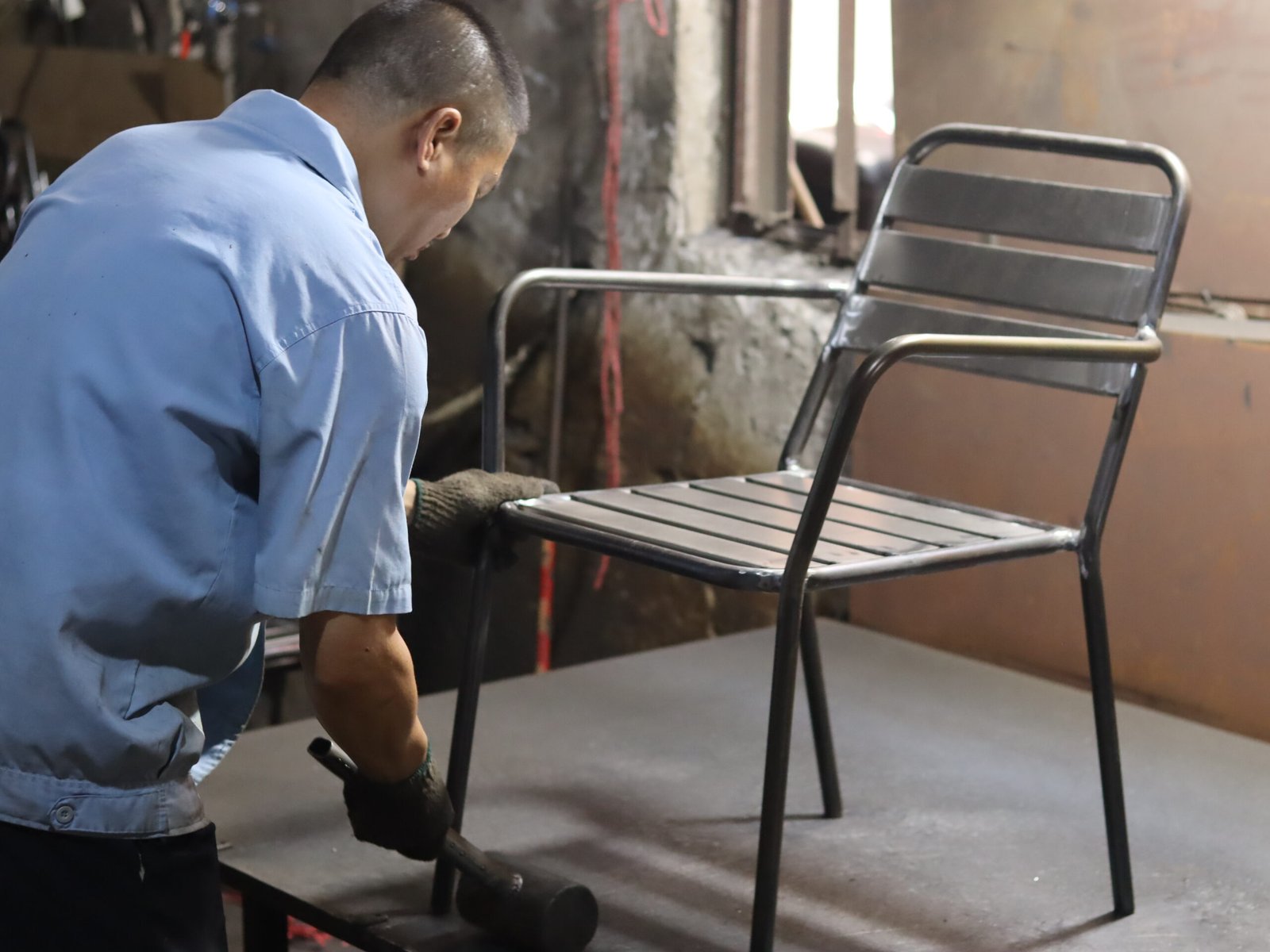
For metal outdoor furniture, look beyond whether the frame appears complete. Check whether the geometry is consistent with the approved reference, whether legs sit evenly, whether visible joints are finished as expected, and whether moving parts operate without rubbing or binding. On a table, review stability on a level surface. On a chair, review the relationship between the seat, back, arms and feet. If an item folds or stacks, make that action part of the check.
Finish and visible surface condition
Finish inspection should compare the produced item with the agreed colour, texture and appearance reference. Review accessible edges, corners, contact areas and the places a customer will see when the furniture is in normal use. Look for visible marks, contamination, incomplete coverage, sharp burrs or inconsistent appearance between related parts. Do not replace a defined requirement with a general phrase such as “good powder coating.” The agreed reference is what makes a finish review meaningful.
Rope, hardware and assembly details
Rope needs its own review. Check that the weave follows the approved direction and pattern; that spacing and tension look consistent; that ends are neatly finished; and that the rope meets the frame in the intended way. When the product includes cushions, review fit, stitching, zips and the relationship between cushion and frame against the approval reference. Hardware packs should be complete and identifiable, particularly where a customer will assemble the item after delivery.

For buyers comparing rope options, the outdoor furniture rope material guide is a useful starting point. It does not replace an approved material sample for a live order.
Before shipment: inspect the finished order, not just a good-looking sample
When goods are complete and available for review, check the order as an order. That means confirming more than the appearance of selected products. Quantity, model numbers, colour allocation, accessories, instructions, carton marks and packing condition all need to be compared with the purchase order and approved reference.
Functional checks should be appropriate to the design. Assemble a knock-down item according to its own instructions. Open and close a folding item. Place a table on a level surface. Stack a stackable chair as intended. Check that hardware, pads, caps and loose components are present and fit correctly. These are not substitute laboratory tests; they are practical checks that reveal whether a finished product is ready for its next step.
Packaging deserves a separate look. Open selected cartons and inspect the product protection, parts pack, instructions and visible surfaces. Then inspect the outer carton for the correct product identification and shipping marks. A carton can be intact while the product inside is poorly supported. The reverse can also be true: a product may be fine, but incorrect carton information can create warehouse errors and customer-service problems later.
Defects and acceptance rules: agree before anyone starts counting
Buyers often ask for an AQL level as though it can answer every quality question. A sampling plan can be useful when it is agreed for an order, but it does not replace the product-specific standard. The buyer and supplier still need to define what is critical, what is major, what is minor and what should be rechecked.
A sharp exposed point, an unstable product or a missing safety-related component may require a different response from a small cosmetic mark on an unseen surface. A colour variation that is acceptable across a mixed material collection may not be acceptable between matching chairs intended to sit together. The correct rule depends on the product, channel and expectation set before production—not on a generic checklist downloaded after the order is finished.
Copyable pre-shipment checklist
Use this list as a purchasing prompt. Adapt it to the actual product and include the final version in the order file or third-party inspection brief.
- □ Purchase order quantity, models, colours and carton count match the finished goods.
- □ Finished products match the approved sample, product sheet and confirmed revisions.
- □ Key dimensions, frame alignment, feet and assembly points are checked against the agreed reference.
- □ Visible finish, colour, texture and workmanship are reviewed on representative finished items.
- □ Rope pattern, tension, ends and frame connection details match the approved direction where applicable.
- □ Folding, stacking, assembly or other product functions are checked in the way the item will be used.
- □ Hardware, pads, caps, instructions, labels and accessory packs are complete and correctly identified.
- □ Inner protection prevents avoidable contact damage to exposed surfaces and loose parts.
- □ Outer cartons carry the correct model, colour, quantity and shipping marks for the order.
- □ Any agreed inspection findings, corrections and re-checks are recorded before shipment release.
Documents and traceability: keep the legal boundary clear
European importers need to confirm the legal and product-specific requirements that apply to the item, destination country, intended use and their role in the supply chain. Under the EU’s general product-compliance framework, an importer must verify that products brought in from outside the EU comply with the rules that apply to them. The EU General Product Safety Regulation (EU) 2023/988 also places obligations on importers relating to product safety, identification, contact information, instructions and traceability. See the European Commission’s general product compliance guidance and the GPSR overview on EUR-Lex.
This does not mean every outdoor chair or table requires CE marking or carries the same document requirement. CE marking is compulsory only where specific EU legislation requires it, and it must not be applied to products outside that scope. Before placing an order, identify the product model, intended use, destination market, required instructions, requested test reports or technical documents, and the information needed to trace the product and its components. Confirm country-specific and product-specific requirements with the responsible importer, a qualified adviser or the relevant authority.
For the product references, identifiers, instructions and record trail behind these checks, see our documentation and traceability guide for EU importers.
What to send with a quality-focused enquiry
A factory can respond more clearly when the buyer sends more than a product photo. A useful enquiry includes the target product or drawing, expected quantity, target country, intended sales or project channel, material and finish direction, packaging expectation, preferred launch date, and any documentation or inspection requirement already set by the buyer.
That information allows the supplier to discuss practical checkpoints before the order becomes difficult to change. It also prevents both sides from treating quality control as a last-minute negotiation.
Keep one reference from sample to repeat order
The best quality-control system is not the longest checklist. It is a shared reference that stays visible from sample approval through bulk production, packing and repeat orders. Buyers can explore our manufacturing capabilities, read the outdoor metal furniture buyer’s guide, and review the factory quality-control route before building an order-specific brief.
This checklist works best after the buyer has made a focused product decision. For that earlier stage, see the European outdoor furniture collection directions, compare the main metal furniture considerations, review rope material options, and visit our outdoor furniture manufacturing page for European buyers. Those pages help shape the product brief; this checklist helps turn that brief into clear checkpoints.
If you are planning a metal or rope outdoor furniture range for Europe, send the product direction, use case, estimated volume and quality requirements through our Get a Quote page. We can then discuss the appropriate product reference, production checkpoints and packing information for the order rather than relying on a generic promise of “high quality”.