
Most furniture buyers start the documentation conversation too late. The product has been chosen, the quotation is approved and the factory is waiting for a deposit. Only then does someone ask where the model number will appear, which version of the assembly instructions is final, or whether the contact details on the packaging match the company placing the product on the EU market.
For an outdoor furniture order, those are not administrative details. They are part of the product specification. A chair, table or lounge set can look right in a sample room and still become difficult to sell, trace or support if the paperwork and product identification were never agreed.
This guide is for EU-based brands, importers, retailers and project buyers sourcing outdoor furniture from outside the EU. It is not legal advice and it does not replace a product-by-product review of the rules that apply in the destination country. Its purpose is more practical: to help a buyer build a documentation pack that can be checked before production, followed during production and used if a question arises after delivery.
Start with the product and route to market, not a generic document request
“Please send all compliance documents” is not a useful instruction to a supplier. It leaves too much open: which model, which materials, which intended use, which country, which sales channel and which language?
Before requesting documents, define the product programme in writing. That normally includes the model name or internal SKU, the intended use, the countries where it will be sold, the customer channel and the exact configuration. A folding garden chair sold online to consumers is not documented in quite the same way as a stackable chair supplied through a hospitality distributor. The underlying product may be similar, but the assembly information, warnings, packaging and buyer records may not be.
For a first order, make this short brief part of the quotation approval. It gives the supplier a reference point and gives the EU buyer a way to compare the finished goods with the product they intended to place on the market.
- Product model or buyer SKU
- Frame material, finish and colour reference
- Rope, fabric, cushion or tabletop specification where relevant
- Intended use: domestic, retail, hospitality, restaurant or project
- Destination country or countries
- Retail, wholesale, e-commerce or contract sales channel
- Assembly, warning and packaging requirements
What traceability should let you do
Traceability is useful only when it lets a business find the right product and the right records quickly. If a customer sends a photo of a loose armrest, a missing hardware pack or a damaged carton, the buyer should be able to work backwards from the product identifier to the approved specification, the production batch and the supplier communication.
That does not require an elaborate digital system on day one. It does require consistency. The product, its carton, the inspection record and the purchase order should use the same model reference. If the buyer uses an internal SKU and the factory uses a factory model code, record both. Do not rely on a product photo with a file name such as “new chair final 2”.
The EU’s general product-compliance guidance explains that a product should be identifiable through a type, batch or serial number and that the relevant economic operators need to meet traceability requirements. For imported goods, the EU importer must check that the manufacturer has prepared the appropriate documentation and met relevant identification and contact-information requirements. Read the European Commission’s current importer guidance.
A workable reference set for an outdoor furniture order
For many furniture programmes, the following is enough to create a reliable trail:
- Model reference: one code for the exact chair, table or set.
- Configuration reference: the approved finish, rope, fabric, cushion, tabletop and packaging version.
- Production or batch reference: a code that connects the product to a production period or order.
- Buyer purchase-order reference: the commercial record that identifies the destination and quantity.
- Document revision: the version of the drawing, instruction, carton artwork and approved sample notes used for that order.
The important point is not the format of the code. It is that the same code is used consistently and is not quietly changed between sampling, bulk production and repeat orders.
Separate manufacturer information, importer information and the EU responsible person
A factory in China, an EU importer and an EU-based responsible economic operator do not automatically have the same role. In a common direct-import structure, the EU importer is the relevant EU-based economic operator. Other arrangements can apply depending on the supply chain and the product. The commercial agreement may define who supplies which records, but it should not blur the responsibilities of the company placing the product on the EU market.
For imported products, EU guidance says the importer must verify that the manufacturer has met applicable obligations and that the product, packaging or accompanying documentation clearly identifies the importer’s name, registered trade name or trade mark and contact address. Where a manufacturer is not established in the Union, the General Product Safety Regulation requires an EU-based responsible economic operator. In a typical direct import, that role is often fulfilled by the importer; an authorised representative or another qualifying operator may be relevant in other supply-chain arrangements. Confirm the actual setup before artwork is printed, rather than after cartons are packed.
In practice, ask early:
- Which company is the manufacturer shown in the product documentation?
- Which EU company is the importer for the shipment?
- What name, postal address and electronic contact details must appear on the product, packaging or accompanying documentation?
- If sales will be made online, what information needs to appear in the product offer?
Article 19 of the GPSR addresses distance sales. An online product offer must clearly and visibly show the manufacturer’s name, postal address and electronic address; when the manufacturer is outside the EU, the name, postal address and electronic address of the EU-based responsible economic operator; information that identifies the product, such as an image, type and other identifier; and any applicable warnings or safety information. Relevant safety information must be available in a language consumers can easily understand in the target Member State. See the official text of Regulation (EU) 2023/988 for the precise legal wording.
Build the technical file from the approved product, not from marketing copy
Marketing descriptions are designed to sell a range. A technical file is designed to show what was actually made. It should be clear enough that a buyer, supplier or market-surveillance authority can distinguish one configuration from another.
For a metal and rope outdoor furniture programme, the record normally starts with a product specification. It can include drawings or dimensions, material descriptions, frame and finish references, rope construction, hardware details, components, assembly steps and packaging. For cushions, include the fabric and filling reference actually approved for that model. If a product is changed after the sample is approved—new feet, a different bolt, a revised arm profile or another powder colour—record that change rather than treating it as an informal production note.
The supplier’s role is to provide accurate product and production information. The EU buyer’s role is to determine which records, assessments, instructions and language versions are needed for the intended market. That division helps both sides. It avoids the factory making legal promises it cannot verify and avoids the buyer discovering too late that a required label or manual was never prepared.
Testing reports are product-specific evidence, not a universal passport
A buyer may ask for an EN 581 report for a selected outdoor chair or table. That can be useful evidence for the exact product and intended use covered by the report. It is not a substitute for product identity, instructions, traceability information or a review of other rules that might apply to the product and market.
When reviewing a report, match it against the commercial specification: model reference, dimensions, construction, intended use and any material changes. A report for a chair with one frame configuration does not automatically support another chair that merely looks similar. This is why an approved sample and document revision record matter.
For a practical explanation of what to compare before an order is frozen, read our EN 581 guide for European outdoor furniture buyers. It covers the boundary between a mechanical-safety standard and the wider set of information a buyer still needs to manage.
Include instructions, warnings and packaging in the same approval process
Outdoor furniture documentation often breaks down at the point where the product is handed to the end user. A clear assembly sheet, the correct hardware pack and relevant care or safety information are part of the buying experience, but they are also part of the information trail.
Agree the final instruction sheet before mass production if the item requires assembly. It should use the correct model reference and show the actual parts supplied. If the product has a folding, reclining or adjustable mechanism, make sure the warning and use information reflects the real mechanism. Do not copy generic wording from another model just to fill a page.
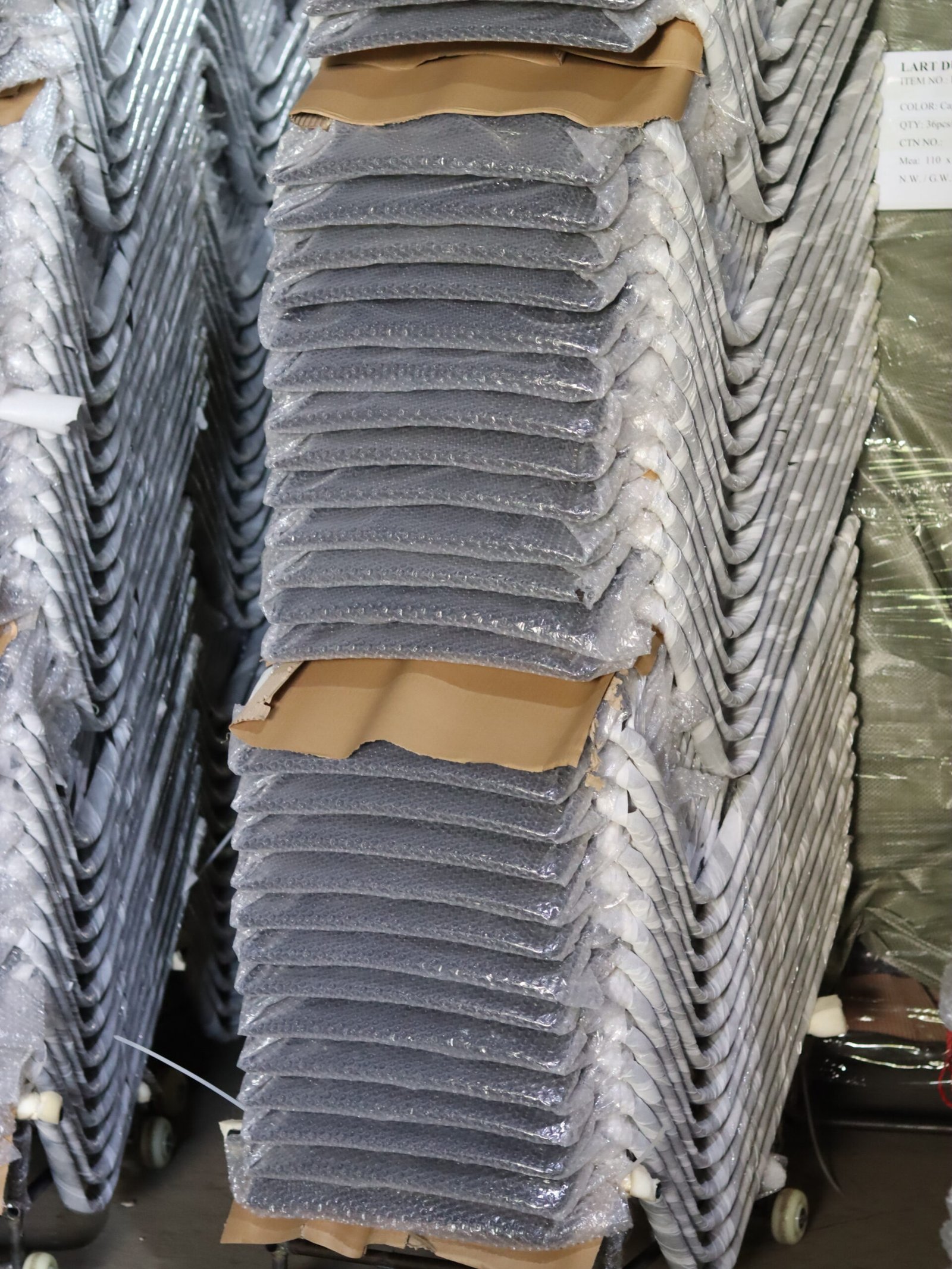
Packaging should also be checked as a product record. The carton marking, barcode if used, model reference, quantity per carton and handling information should line up with the packing list and order record. A buyer who cannot identify a carton cannot easily isolate an issue in a warehouse or a later claim.
Do not wait for the final inspection to discover a document gap
A final inspection is valuable, but it cannot recreate an approval record that never existed. By the time cartons are sealed, it is expensive to change labels, rewrite an instruction sheet or establish whether the delivered finish is the one that was approved.
Use the production schedule to set simple document gates:
- Before sampling: confirm the product brief and intended market.
- At sample approval: sign off the product reference, materials, finish, construction, packaging direction and change log.
- Before bulk production: confirm artwork, instructions, label text and document-owner responsibilities.
- During production: retain inspection records against the approved reference.
- Before shipment: compare labels, carton marks, product identifiers, instructions, accessories and packing documents with the approved file.
Our outdoor furniture quality-control checklist is the companion to this article. It focuses on what should be checked in production and before shipment. This guide focuses on the documents and identifiers those checks should refer back to.
A copyable documentation request for a new supplier
Send this list with the product brief, then adapt it to the actual product and market. It is more useful than asking for “all certificates”.
- Confirmed model and configuration reference
- Product specification, drawings and approved-sample notes
- Material and component references for the final configuration
- Manufacturer name and contact details for the product record
- Proposed product, packaging or accompanying-document identification method
- Assembly instructions, care information and relevant warnings for buyer review
- Carton artwork, carton marks, pack list format and accessory-pack details
- Applicable test reports or technical evidence for the specific model, where requested
- Production and inspection records linked to the order
- A change log for approved differences between sample and bulk production
For questions on manufacturing controls and available factory-process information, see our manufacturing capabilities and quality-control process. They describe our working process; they do not replace the buyer’s own product and market review.
Use documentation to make repeat orders simpler
The strongest reason to build this file is not a hypothetical audit. It is that the second order should be easier than the first. When the model, finish, rope, cushion, hardware, carton and instructions have all been fixed in a usable reference set, a repeat order can start with a comparison rather than a complete rediscovery of the product.
That is particularly useful for buyers building a European range over more than one season. The Europe market page explains how we support made-to-order programmes from Foshan; this guide gives the buyer a way to keep the product definition clear once a programme moves from sample to production. Explore our outdoor furniture manufacturing support for European buyers.
Before you request a quote
Send the product categories you are considering, the target countries, expected use, estimated quantities, desired finishes, packaging requirements, documents you already require and your preferred launch timing. If you have drawings, existing label artwork or a product specification, include those too.
A clearer brief produces a more useful quotation and a more realistic documentation plan. Request a catalogue and factory quote when you are ready to discuss a metal or rope outdoor furniture programme.