
Last reviewed: July 2026. This buyer’s guide reflects the current EN 581 editions listed by European national standards bodies at the time of review.
When a supplier says that an outdoor chair or table is “EN 581 tested”, the useful response is not simply to ask for a certificate. Ask which product was tested, which part and edition of the standard appears on the report, what use category was assessed, and whether the production model still matches the tested sample.
EN 581 is a family of standards for adult outdoor seating and tables used for camping, domestic and contract purposes. It is not a general badge for weather resistance, corrosion performance or every legal requirement in Europe. For an importer, retailer or hospitality supplier, its value is narrower and more practical: it provides a recognised framework for discussing general and mechanical safety.
Quick answer
Before ordering, request the complete report and match it to the exact product, construction and intended use. Then keep EN 581 review alongside—rather than instead of—sample approval, material checks, production quality control, packaging review and the importer’s own product-safety assessment.
What Does EN 581 Cover?
The standard family separates general safety requirements from the mechanical requirements for seating and tables. Buyers need to identify the relevant part instead of using “EN 581” as a vague line on a quotation.
| Standard | Main scope | What a buyer should confirm |
|---|---|---|
| EN 581-1:2017 | General safety requirements for adult outdoor seating and tables for camping, domestic and contract use. | The product type and intended use are within scope, and the report identifies the applicable general safety review. |
| EN 581-2:2026 | Mechanical safety requirements and test methods for adult outdoor seating, including strength, reliability and stability. | The tested chair or other seating model, use category, construction and 2026 edition match the proposed order. |
| EN 581-3:2026 | Mechanical safety requirements and test methods for adult outdoor tables, including tables containing glass. | The tabletop, base, connections, dimensions and intended use correspond to the report. |
At the time of this review, BSI lists BS EN 581-1:2017 as current. The current seating and table editions are BS EN 581-2:2026 and BS EN 581-3:2026. A report against an older edition is not automatically useless, but the buyer should ask a qualified laboratory or compliance adviser whether additional review is needed for the destination market and order date.
Official scope references: BSI: EN 581-1 general safety, BSI: EN 581-2 current edition and BSI: EN 581-3 table requirements.
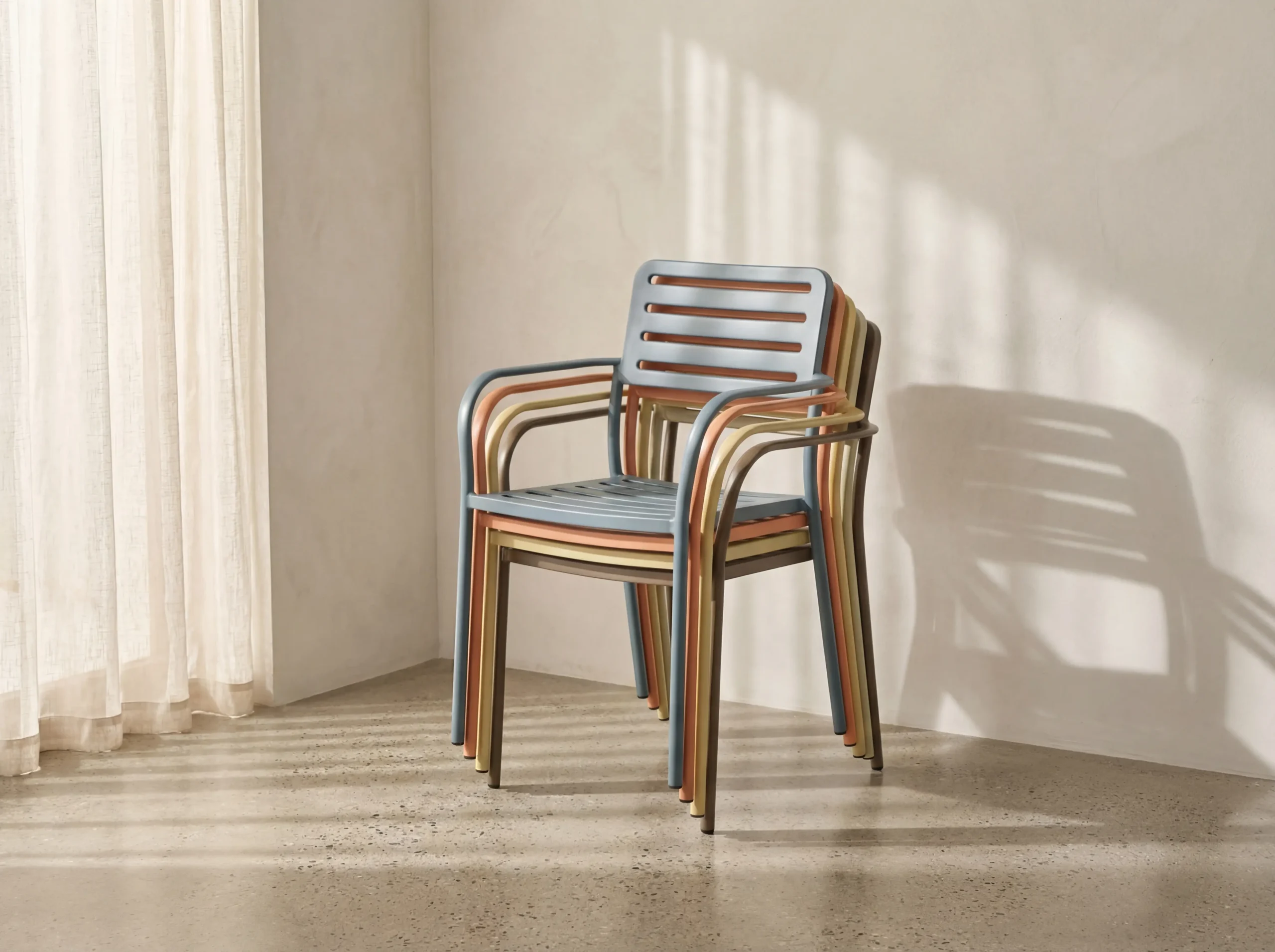
Start With Intended Use: Camping, Domestic or Contract
A buyer should define the use environment before discussing testing. A lightweight chair for occasional private-garden use is not being selected for the same duty as seating moved every day on a restaurant terrace. “Outdoor” describes the location, but it does not define the usage level.
Contract use commonly involves repeated guest use, staff handling, frequent cleaning, stacking or repositioning. This does not mean that every hospitality product is automatically suitable merely because a supplier calls it contract grade. Put the intended environment in the product brief and ask the test laboratory or responsible technical party which classification and requirements apply.
Useful details to send at the enquiry stage include:
- the sales or project channel: domestic retail, camping, café, restaurant, hotel or another contract setting;
- whether the chair will be stacked, folded or frequently moved;
- whether the table has a central base, four legs, a folding mechanism or a glass component;
- the expected place of use and any foreseeable misuse the buyer needs to consider;
- the destination country and the buyer’s required report language or document format.
What to Check on an EN 581 Test Report
A logo, a one-page summary or a cropped screenshot is not enough to establish that a report belongs to the product being purchased. Ask for the complete document and review it against the quotation, sample and specification.
1. Product identity
Look for a model number, description and clear product photograph or drawing. If the supplier uses a different internal code from the buyer’s SKU, record both codes in the order file. A report for “outdoor chair” without enough identifying detail creates uncertainty when several similar frames are offered.
2. Standard part and edition
The report should state the exact reference used. “EN 581” alone does not tell you whether the document concerns general safety, seating or tables. For current sourcing, buyers should pay particular attention to whether seating and table reports cite the 2026 editions.
3. Intended use
Confirm whether the tested product was assessed for camping, domestic or contract use. Do not assume that a report for one category supports a different sales claim. If the intended use is unclear, ask the laboratory or the importer’s technical adviser before approving the product.
4. Tested construction
Compare the report photograph and description with the approved sample. Check the frame layout, armrests, seat and back support, table base, folding parts, fasteners and principal dimensions. If a glass top is part of the order, it must not disappear from the document review simply because the base looks identical.
5. Laboratory, report date and result
Record who issued the report, when testing took place and whether the complete tested sample met the stated requirements. Check for limitations or deviations. If pages, annexes or photographs are missing, request the full copy rather than filling gaps with assumptions.
A better purchasing question
Instead of asking “Do you have EN 581?”, ask: “Please send the full report for model CF-___, identify the standard part and edition, confirm the assessed use category, and mark any differences between the tested sample and our proposed order.”
Match the Tested Sample to the Production Order
The report is only one reference point. The next task is to prevent the commercially approved product from drifting away from the tested construction.
Create a controlled specification that links the report to the approved sample. It should identify the frame material and principal dimensions, tube or section specification where relevant, joint construction, hardware, seat and back support, arm details, feet, table base and top, plus any folding or locking parts.
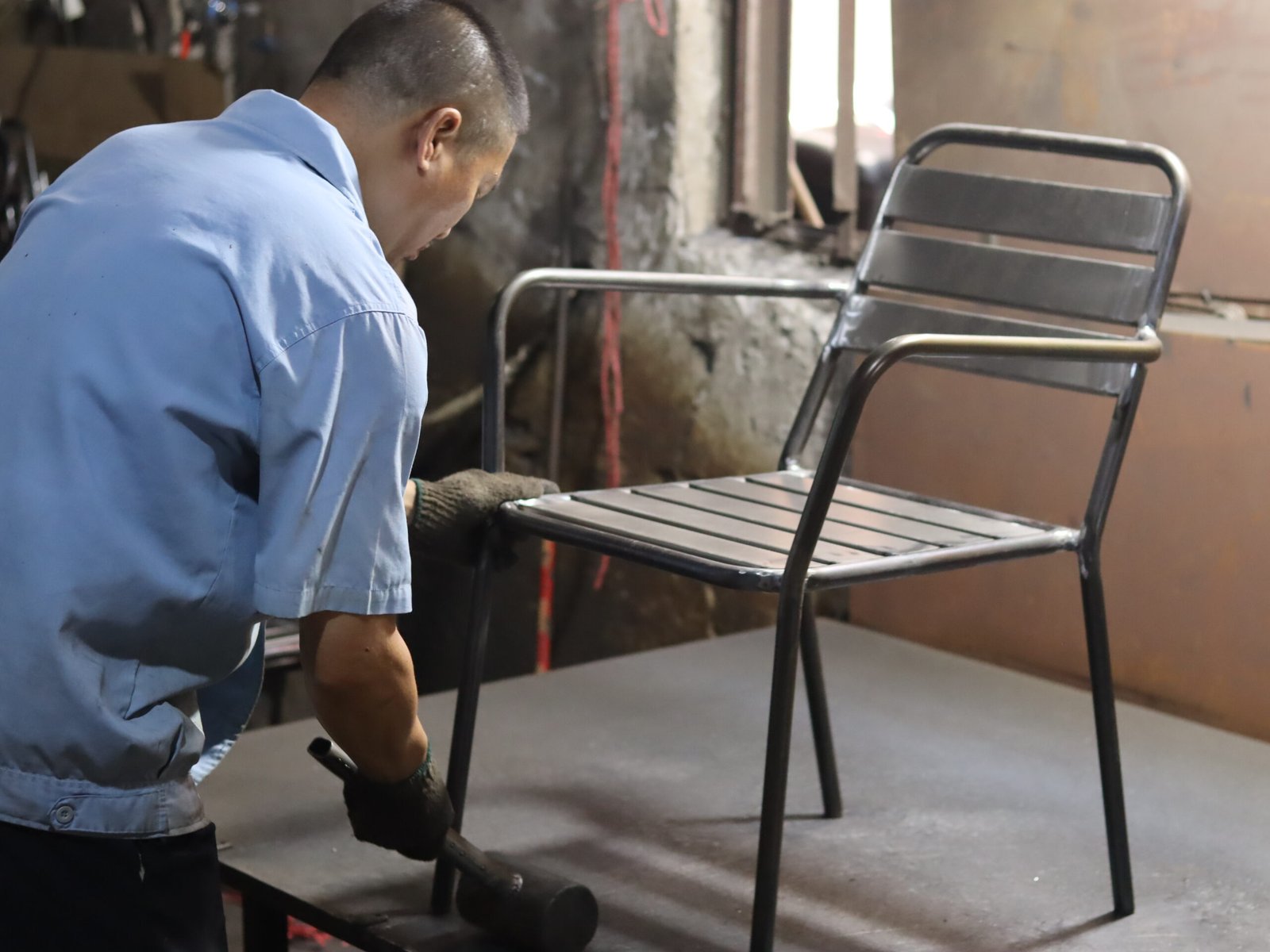
Then identify the production checks that can confirm consistency. Depending on the product, these may include frame alignment, weld location and finishing, hardware installation, opening and locking of folding mechanisms, stability on a level surface, stackability, assembly fit and finished dimensions.
This is where the test report connects to the factory’s outdoor furniture quality-control checklist. The report shows what a defined sample was assessed against. Production inspection asks whether the goods being shipped still represent that approved construction.
Testing is only one part of a usable EU product file. Review our guide to outdoor furniture documentation and traceability for EU importers before approving artwork, instructions or packing details.
When Does a Product Change Need Further Review?
Not every commercial change has the same technical significance. A carton artwork update is different from changing the chair’s frame geometry. A new powder-coating colour may not alter structural performance, while a thinner section, revised weld, different joint, larger tabletop or new folding mechanism could.
Changes that deserve explicit review include:
- frame material, section, thickness or geometry;
- seat, back, arm or leg construction;
- weld, fastener or connector design;
- chair dimensions or load paths;
- tabletop size, material, support or base layout;
- folding, locking, reclining or height-adjustment mechanisms;
- a different intended-use category.
The buyer should not decide alone that an old report “still covers” a revised product. Document the change and ask the issuing laboratory or another competent technical party whether the report remains relevant, needs an engineering review or requires a new sample.
What EN 581 Does Not Prove
This is the most important boundary in the article. A product can satisfy mechanical requirements within the standard’s scope and still be unsuitable for a particular climate, upholstery specification, retail channel or packaging system.
The 2026 seating scope excludes resistance to ageing and degradation caused by light, temperature and moisture. It also excludes removable upholstery, including the cover and filling. The 2026 table standard likewise does not assess resistance to ageing or degradation. EN 581 therefore should not be used as proof of:
- corrosion resistance or a specific salt-spray duration;
- UV performance or colourfastness of rope, fabric or coating;
- water resistance, drainage performance or mould resistance;
- upholstery durability or suitability of cushion filling;
- packaging strength and protection during transport;
- consistent colour, finish or workmanship across repeat orders;
- compliance with every EU or national product requirement.
Those issues need separate specifications, evidence and checks. For example, a rope chair order should define the selected rope construction and colour reference, then use the outdoor furniture rope material guide to prepare material questions. A metal frame order needs a finish specification and production inspection; our outdoor metal furniture sourcing guide provides a separate starting point.
How EN 581 Fits Into an EU Importer’s Product File
EN 581 review does not transfer the importer’s responsibilities to the factory or laboratory. EU guidance states that importers must verify that applicable product requirements, documentation, traceability information, instructions and safety information have been addressed before placing a product on the market.
Which rules apply depends on the product, destination, channel and how it is marketed. Ordinary non-electrical outdoor furniture should not be described as automatically requiring CE marking. CE marking applies only where specific EU legislation requires it for the product concerned.
For the wider responsibility framework, consult the European Commission’s general product-compliance guidance and obtain professional advice for your actual market. Keep EN 581 reports with the product specification, risk review, identification and traceability records, instructions, warnings where required, supplier information, approved sample records and inspection documents.
A Copyable EN 581 Buyer Checklist
- □ We have defined the product’s intended use: camping, domestic or contract.
- □ The report identifies the exact chair or table model with a photograph, drawing or clear description.
- □ The report states the relevant standard part and edition.
- □ The use category on the report matches the product claim and sales channel.
- □ We have received the complete report, including result pages, photographs and limitations.
- □ The approved sample matches the tested frame, dimensions, joints, hardware and mechanisms.
- □ Any structural or material change has been recorded and reviewed by a competent party.
- □ The purchase specification links the buyer’s SKU, supplier model and test report.
- □ Production QC will check the features that connect the bulk goods to the approved sample.
- □ Weathering, corrosion, rope, upholstery and packaging requirements are covered separately.
- □ Applicable EU and national product-safety, labelling, instruction and traceability duties have been reviewed.
- □ The report and approval records will remain in the order file for repeat production.
From Report Review to Factory Control
A careful supplier should be able to identify the relevant model, explain what documents are currently available and show where the proposed order differs from a previously tested product. If testing is requested for a new model, agree on the sample construction before it is sent to the laboratory.
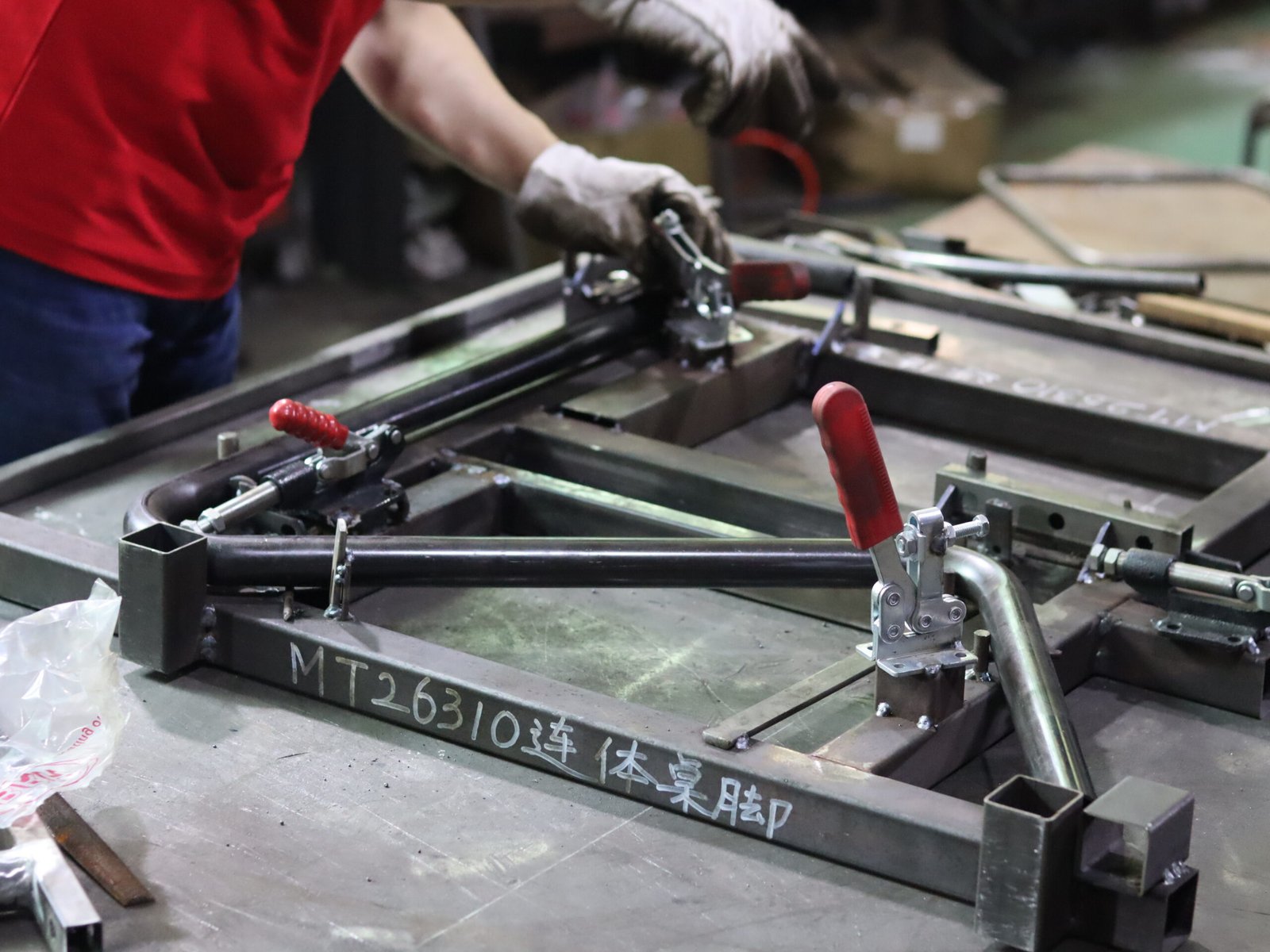
During production, the buyer and factory should work from the same revision of the specification. Photographs and measurements are useful, but they should not replace agreed inspection criteria. Before shipment, verify product identity, construction, function, finish, quantities, labels, instructions, hardware packs and packaging.
You can review how these controls fit into our Quality Control & Testing process and manufacturing capabilities. These pages describe factory support; they do not claim that every product has the same report or test status.
Questions to Send Before Requesting a Quote
- Which EN 581 part and edition is relevant to this exact model?
- Is an existing report available, and can we receive the complete copy?
- Was the tested sample assessed for camping, domestic or contract use?
- Which details in our requested construction differ from the tested sample?
- Should any change be reviewed by the laboratory before production?
- What separate evidence is available for coating, rope, upholstery or other material requirements?
- How will bulk production be checked against the approved sample and specification?
- Which product identification, instructions, labels and traceability details must we supply for the destination market?
Planning a European Outdoor Furniture Order
Colors Furniture manufactures metal and rope outdoor furniture in Foshan, China, for brands, importers, wholesalers, retailers and hospitality projects. Testing or documentation can be reviewed or arranged according to the selected product, intended use and buyer requirements. We do not treat one report as proof for an entire catalogue.
Start with the Europe outdoor furniture sourcing page, then review the relevant outdoor dining chairs or outdoor dining tables. To discuss a model, intended use, sample and document list, send us your product brief.
This article provides general sourcing information, not legal or conformity-assessment advice. Standards and product rules can change; confirm the current requirements for the exact product and destination before placing it on the market.